
by Devon Hollawell
Think about how many apps you open before noon.
You text someone in one app, scroll social media in another, order food somewhere else, pay through another service, then jump to a browser when you actually need information. We have gotten so used to switching between platforms that we barely notice how fragmented the experience is.
That is what made the Weixin case stand out to me.
Weixin did not win by asking users to do more. It built an ecosystem that allowed them to do more with less effort.
And from a marketing perspective, that difference is huge.
The All-Inclusive Resort of Social Media
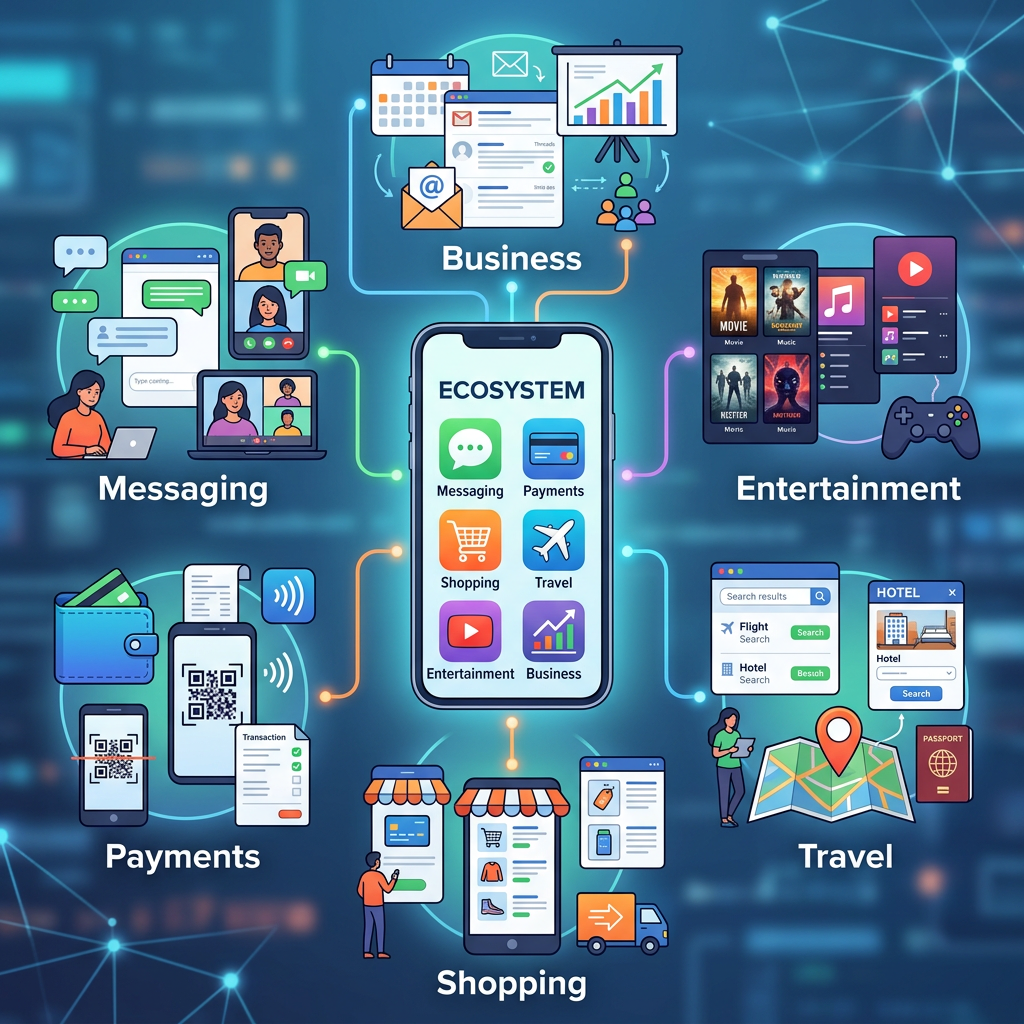
Mahoney and Tang compare Weixin to an all-inclusive resort. Once you are inside, almost everything you need is already there. Instead of building a social platform around one function, Weixin integrated communication with other parts of users’ everyday lives.
That strategy has only expanded since the original case study. Today, Tencent describes Weixin as a mobile digital lifestyle that combines features including messaging, Moments, Official Accounts, payments, search, video, and Mini Programs. Its Mini Programs can provide services involving shopping, dining, travel, healthcare, utilities, and more without requiring users to constantly leave the Weixin ecosystem. Tencent
That is more than convenience. It creates habit.
Every additional reason to stay inside Weixin becomes one less reason to leave it.
Know Your Audience Before You Market to Them
One of my biggest takeaways from this case is how well Weixin’s strategy reflects its audience.
Good social media marketing is not about finding the newest feature and forcing it into a strategy. It is about understanding what people already want to do and making that behavior easier.
Weixin integrated its platform into existing behaviors and cultural practices rather than expecting users to change those behaviors for the platform. The result is an experience where social interaction and commercial activity do not necessarily feel like two completely separate things.
That connects directly to what we have been learning about inbound marketing. Instead of constantly interrupting consumers and fighting for another click, brands can create something useful enough that people have a reason to come to them.
There is a pretty simple marketing lesson buried in that: being useful can be more powerful than being loud.
The Business Model Is Bigger Than the App
This case also changed how I think about the difference between a product and a business model.
If Weixin were simply a messaging app, its value would depend heavily on how many people wanted to message each other. Instead, its ecosystem creates opportunities for businesses to become part of activities users are already completing.
Tencent explains that Weixin Mini Programs lower the barrier for businesses to establish a digital presence within the ecosystem. That means a business does not necessarily have to convince a customer to leave Weixin, visit another website, download another app, create another account, and then complete an action. Tencent
That is friction disappearing in real time.
A recent example makes the strategy even clearer. In 2025, Uber launched a Weixin Mini Program allowing Chinese travelers to search, book, and pay for rides through Weixin while traveling internationally. Instead of asking those consumers to completely change their existing digital habits, Uber essentially went to where they already were. Tencent
That is audience-first marketing.
But There Is a Tradeoff
The same thing that makes the super-app model so powerful also raises a question for me: How much of our digital lives do we actually want concentrated in one ecosystem?
Convenience creates value, but putting communication, content, services, commerce, and payments together also means users are placing significant trust in one platform. That tradeoff matters, especially when thinking about whether the same model would translate perfectly into every market.
I think the concept could absolutely appeal to consumers elsewhere. I am less convinced that copying Weixin feature-for-feature would produce the same result without considering cultural expectations and consumer behavior first.
And maybe that is the most important lesson in the entire case.
Make the Customer’s Life Easier
The lesson I take from Weixin is not that every company needs to build a super-app. Please don’t. We have enough apps.
It is that good marketing removes friction.
Weixin found ways to connect activities its users were already doing and brought more of that experience into one ecosystem. The more useful the platform became, the fewer reasons users had to leave.
For marketers, I think that flips an important question.
Instead of constantly asking, “How do we get consumers to do more for the brand?”
Maybe we should be asking:
“What can the brand make easier for the consumer?”
That is where attention starts turning into actual value.


Leave a Reply