
Imagine building a social network so culturally relevant that millions of people create communities, conversations, and inside jokes around it.
You understand your audience, give them a place to belong, and become part of their everyday digital lives.
Then you lose them.
*crickets*
That’s what makes the Orkut case so interesting.. It’s failure wasn’t because people suddenly stopped wanting social media. If anything, the opposite happened. Social networking exploded.
The problem was that the expectations of its community evolved faster than the platform did.
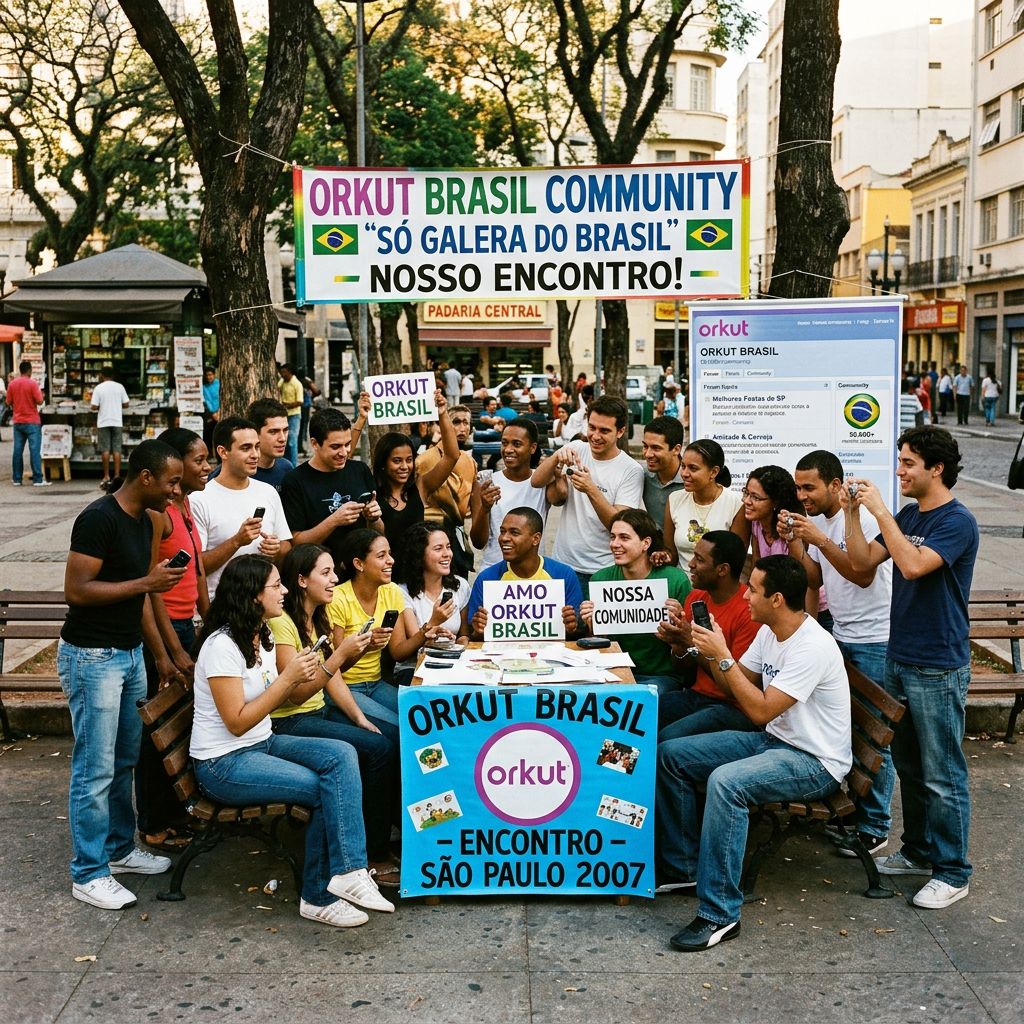
Before Facebook Took Over, There Was Orkut
Google launched Orkut in 2004 as one of its first experiments with social networking. The platform allowed users to create profiles and connect through communities built around shared interests, schools, workplaces, hobbies, and just about anything else people could find common ground around.
And people definitely found common ground.
When Google shut Orkut down in 2014, its public community archive contained 51 million communities, 120 million topics, and more than one billion interactions.
Brazil became especially important to the platform. At one point, Brazilian users represented roughly two-thirds of Orkut’s audience.
Orkut by the Numbers
51 million communities
120 million discussion topics
1+ billion interactions
Source: Google
That kind of adoption is not just a technology success. It is a cultural fit.

Orkut gave users a space to build communities around the things they cared about while giving marketers access to consumers who were already discussing interests, brands, and products with one another.
Instead of brands creating every conversation themselves, communities helped create and distribute the conversation for them.
Sound familiar? That is basically the foundation of modern community-led marketing.
So, What Went Wrong?
This is where I think Orkut becomes a marketing lesson.
PSA: Getting an audience is not the same thing as keeping one.
Users increasingly expected better functionality, easier content sharing, stronger privacy controls, and a smoother overall social experience. Competitors were evolving too. Eventually, Facebook offered users another way to maintain connections and share content while social media itself became much more sophisticated.
Google was making improvements to Orkut. In fact, the company reported making thousands of changes to the platform over the years, including photo editing, privacy settings, brand communities, video chat, and social games.
But improvement alone was not enough when the competitive environment and consumer expectations were changing just as quickly.
When Google announced Orkut’s shutdown, it acknowledged that communities on YouTube, Blogger, and Google+ had grown faster and that Google would focus its resources on those platforms.
That distinction matters.
A platform can still have an active community and lose its competitive position at the same time.
Community Is Not Something You Build Once
The biggest takeaway I see from Orkut is the importance of continuously listening to the people who create value within a social platform.
We have talked throughout this course about monitoring engagement and adjusting strategy based on audience behavior. Orkut shows what that looks like on a much larger scale.
Social communities are participatory. The platform may provide the technology, but users create the conversations, relationships, content, and culture that make people want to come back.
That means marketers cannot assume that understanding an audience once means understanding them forever.
What Orkut Still Teaches Marketers
- Build around people, not just features. Orkut became culturally relevant because its communities gave people somewhere to belong.
- Keep listening after you find your audience. Consumer expectations change, and yesterday’s successful experience can quickly become outdated.
- Watch the competition. Users compare their experiences across platforms, even when brands do not.
- Community requires participation. Strong social communities give users a role in creating the conversations and culture around them.
These lessons connect directly to what we are learning about social media’s influence on communities and culture. People do not simply consume social content anymore. They participate in it, shape it, share it, and create their own communities around it.
The Lesson Orkut Left Behind
Orkut disappeared, but the behavior that made it successful absolutely did not.
Facebook Groups, Reddit communities, LinkedIn Groups, Discord servers, and niche creator communities all rely on the same basic human behavior: people want spaces where they can connect with others who understand what they care about.
For marketers, that makes the Orkut case surprisingly relevant today.
Building a large audience is great. Building an engaged community is better. But neither guarantees that people will stay.
The brands and platforms that last are the ones that keep listening after everyone else assumes they have already figured the audience out.
What Do You Think?
If Orkut had continued evolving alongside its users, do you think it could have survived the rise of Facebook, or was its decline inevitable?
Drop your thoughts in the comments. 🙂
 Art of Digital Influence
Leave a comment